
現在,讓 AI 寫一篇 600 字作文,只需要幾秒鐘。結構可以完整,句子可以流暢,甚至還能主動加入比喻和排比。於是,一個越來越現實的問題擺在老師和家長面前:既然 AI 都會寫作文了,孩子為什麼還要花時間學中文?AI can now produce a 600-character Chinese essay in seconds. It can give it a complete structure, write fluent sentences and even add metaphors and parallel phrasing. This leaves teachers and parents facing an increasingly pressing question: if AI can already write essays, why should children still spend time learning Chinese?
答案也許不是「要不要用 AI」,而是:孩子有沒有能力判斷 AI 寫得對不對、好不好,以及什麼才是真正值得保留的表達。Perhaps the question is not whether children should use AI, but whether they can judge if its writing is accurate and effective—and which expressions are truly worth keeping.
AI 進課堂,已經不是「將來時」AI in the Classroom Is Already Here
中小學數字教育發展藍圖Digital Education Development Blueprint for Primary and Secondary Schools
- 2026.06.1717 June 2026
- 教育局發布《中小學數字教育發展藍圖》The Education Bureau publishes the Digital Education Development Blueprint提出全面為學生推行人工智能教育Proposes AI education for all students
- 2026.06—07June–July 2026
- 中國語文科納入「人工智能+科目」教師培訓Chinese Language joins “AI + Subject” teacher training小學、中學均有相關課程Relevant courses for both primary and secondary teachers
- 2026/27 學年2026/27 school year
- 校本支援出現「善用人工智能,提升語文素養」School-based support includes using AI to enhance language literacyAI 開始更具體地進入語文學與教AI begins to play a more concrete role in language learning and teaching
- 教師專業發展Teacher development
- 每 3 年 150 小時持續專業發展周期150 hours of continuing professional development in each three-year cycle其中數字教育培訓不少於 30 小時Including at least 30 hours of digital education training
香港教育局正式發布《中小學數字教育發展藍圖》,教育局的教師培訓中已經出現「人工智能+中國語文科」課程。AI 正在進入真實的學與教場景。Hong Kong’s Education Bureau has officially published the Digital Education Development Blueprint for Primary and Secondary Schools. Its teacher training already includes courses on “AI + Chinese Language”. AI is becoming part of real teaching and learning.
所以今天再談中文學習,重點不該只是「禁止還是允許 AI」,而應該問:當機器能迅速生成文字,孩子真正需要練的能力是什麼?So when we talk about learning Chinese today, we should look beyond whether AI should be banned or allowed. We should ask: when machines can generate text so quickly, which abilities do children really need to develop?
AI 越會寫,孩子越需要「判斷力」The Better AI Writes, the More Children Need Judgement
《中小學應用人工智能教學指南》並沒有簡單地把 AI 當成一個「提高作業效率」的工具。教育局提出,教師應指導學生正確使用人工智能工具,例如:比較個人創作與 AI 生成內容的異同,並對輸出內容進行審核,確保內容準確、合宜。The Guidelines on the Application of Artificial Intelligence in Teaching and Learning for Primary and Secondary Schools do not simply treat AI as a tool for completing homework more efficiently. The Education Bureau advises teachers to guide students in using AI tools appropriately—for example, by comparing their own work with AI-generated content and reviewing the output for accuracy and suitability.
會生成文字 ≠ 會寫作Generating Text ≠ Knowing How to Write
AI 可以成為工具,但語文能力不能被「一鍵生成」。AI can be a tool, but language ability cannot be generated at the click of a button.
AI 擅長做什麼?What Is AI Good At?
- 生成句子Generating sentences
- 潤色文字Polishing wording
- 提供結構Suggesting a structure
- 給出多個答案Offering several answers
孩子必須學會什麼?What Must Children Learn?
- 讀懂Understanding what they read
- 判斷Making judgements
- 選擇Making choices
- 用自己的語言表達Expressing ideas in their own words
- 修改與反思Revising and reflecting
這裏其實有一個非常重要的詞:審核。One word here is particularly important: review.
為什麼要審核?因為 AI 給你的,不一定就是對的。即使內容沒有明顯事實錯誤,也不代表它的觀點一定合理;觀點看似合理,也不代表它適合放在你的文章裏。Why review it? Because what AI gives you is not necessarily correct. Even if there are no obvious factual errors, its argument may not be sound. And even if an argument seems reasonable, it may not belong in your essay.
以前,孩子遇到一道閱讀題,最大的困難可能是:「我不知道答案。」以後,另一種困難可能會越來越常見:「AI 已經給了我三個答案,但我不知道哪一個答案值得相信。」In the past, a child’s biggest difficulty with a reading question might have been: “I don’t know the answer.” In future, another difficulty may become increasingly common: “AI has already given me three answers, but I don’t know which one to trust.”
這個時候,真正能幫助孩子的,不是打字速度,也不是「提示詞」背得多熟,而是他本身擁有的閱讀能力、邏輯能力和語言判斷能力。At that point, what truly helps a child is neither typing speed nor how well they have memorised prompts. It is their own reading ability, logical thinking and judgement about language.
AI 時代,更值得孩子練的三種中文能力Three Chinese Language Abilities Worth Developing in the AI Age
不是「寫得比 AI 更快」,而是擁有駕馭工具的底層能力。The aim is not to write faster than AI, but to build the underlying abilities to use tools well.
閱讀與判斷Reading and Judgement
- 讀懂文本Understand a text
- 辨別事實與觀點Distinguish fact from opinion
- 判斷答案是否可信Decide whether an answer is trustworthy
組織與表達Organisation and Expression
- 抓住中心Identify the central idea
- 安排層次Organise ideas clearly
- 把複雜事情說清楚Explain complex matters clearly
修改與反思Revision and Reflection
- 發現套話與漏洞Spot clichés and gaps
- 質疑 AI 輸出Question AI’s output
- 把文字改成「自己的話」Rewrite in your own words
AI 越容易給答案,我們越需要教孩子判斷答案。The easier it becomes for AI to supply answers, the more we need to teach children how to judge them.
判斷之外,更需具備「審美力」Beyond Judgement: A Sense of Literary Quality
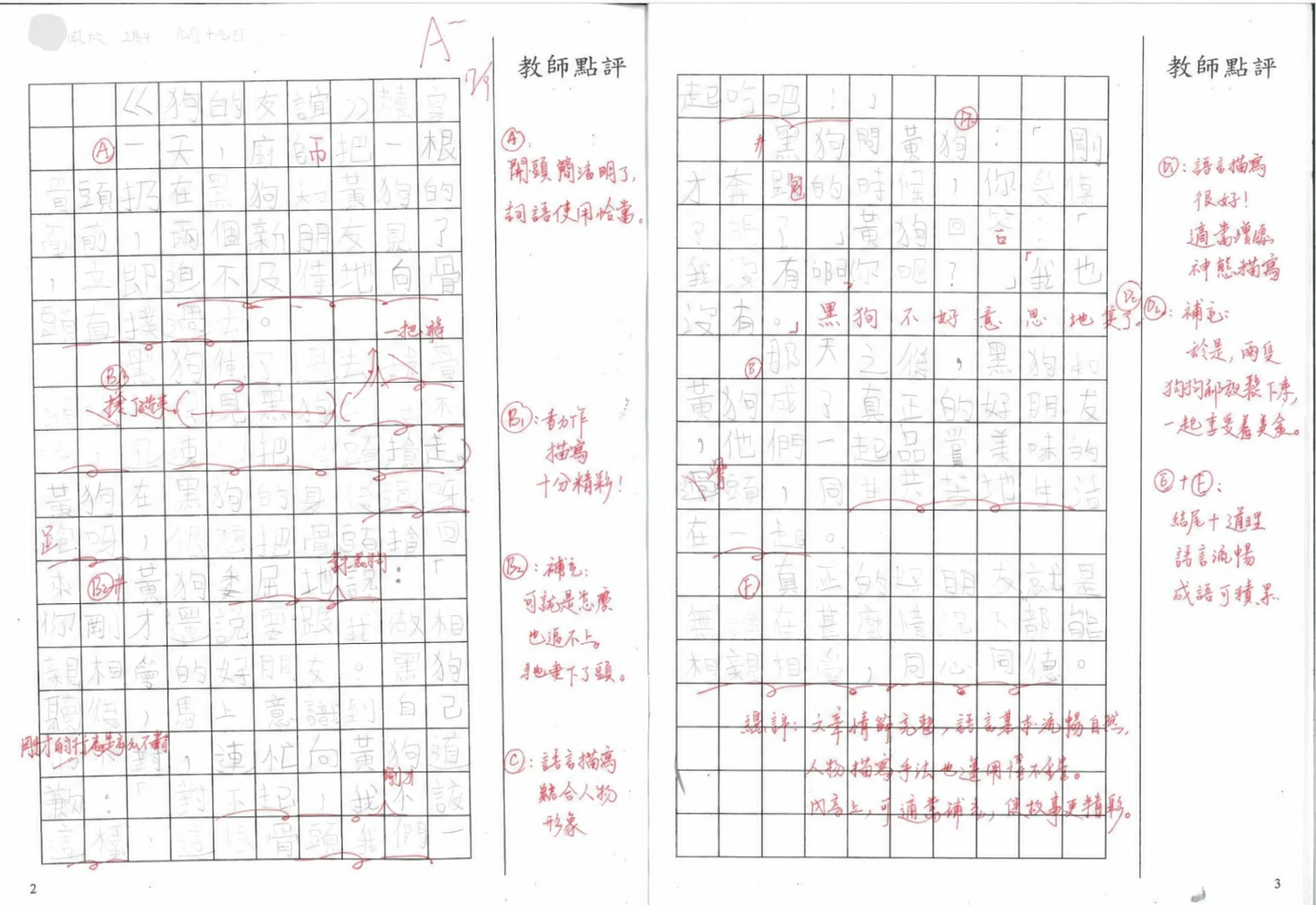
讓我們脫離抽象的討論,用漢源學生的習作和 AI 生成的文章進行一次真實對比。Let us move beyond the abstract discussion and make a real comparison between a Han Yuan student’s work and an AI-generated essay.
AI 生成文章AI-Generated Essay
一天,廚師把一根骨頭扔在了黑狗和黃狗的面前,兩個新朋友見了,立即迫不及待地向骨頭直撲過去。One day, a cook threw a bone in front of a black dog and a yellow dog. The two new friends saw it and immediately rushed towards it, unable to contain their eagerness.
動作敏捷的黑狗率先叼住了骨頭的一端,黃狗也迅速跟上咬住另一端。牠們繃緊身體互相拉扯,喉嚨裏發出低沉的嗚咽聲,誰都不肯鬆口。黑狗嚴肅地說:「我先碰到骨頭,它應該屬於我。」黃狗立刻反駁:「我們同時出發,憑什麼你獨佔?」The nimble black dog was the first to seize one end of the bone. The yellow dog quickly followed and bit the other end. Their bodies tensed as they pulled against each other, low growls rising in their throats. Neither would let go. The black dog said solemnly, “I touched the bone first. It should belong to me.” The yellow dog immediately objected: “We set off at the same time. Why should you have it all?”
黑狗心裏盤算着:這根骨頭香氣濃郁,要是分一半給對方,自己肯定吃不飽,剛才說的分享也不過是隨口說說罷了。黃狗也暗自思忖:作為朋友,牠本來就該謙讓我。沒過多久,牠們就扭打在一起,吠叫聲此起彼伏,原本順滑的毛髮變得亂糟糟的。The black dog calculated silently: this bone smells delicious. If I give half to the other dog, I certainly won’t have enough to eat. All that talk of sharing was just something I said. The yellow dog was thinking privately too: as my friend, it should let me have my way. Before long, they were fighting, barking one after the other, their once-smooth coats becoming a tangled mess.
等到雙方都累得氣喘吁吁,看着滾到一邊的骨頭和彼此狼狽的樣子,都停下了動作。這個故事告訴我們,真正的友誼不能只停留在口頭承諾,在利益面前還能堅守謙讓與真誠,才是經得起考驗的真摯情誼。When both were exhausted and panting, they looked at the bone that had rolled to one side and at each other’s dishevelled appearance, and stopped. This story tells us that true friendship cannot remain a matter of spoken promises. Only a friendship that holds on to generosity and sincerity when self-interest is at stake can stand the test.
可見,真正值得比較的,不是誰用了更多「好詞好句」,而是文字裏有沒有只屬於這個孩子的生活細節、觀察角度和自然情緒。What is truly worth comparing, then, is not who has used more “impressive words and sentences”, but whether the writing contains details of everyday life, a perspective and natural emotions that belong to this particular child.
詞語是準確而不是堆砌,句子有沒有節奏,描寫有沒有分寸,語言是否符合孩子的年齡和語境。Are words used precisely, rather than piled up? Do the sentences have rhythm? Are descriptions proportionate? Does the language fit the child’s age and the context?
漂亮的形容詞很多,不等於文字就有美感;真正的審美,是知道什麼地方應該寫滿,什麼地方反而應該留白。AI 文本即使結構很完整,也可能出現表達過於均勻、成人化或缺少個人經驗的問題。A wealth of attractive adjectives does not necessarily make writing beautiful. A true sense of literary quality means knowing where to elaborate and where to leave space. Even a well-structured AI text can be too uniform in its expression, too adult in its voice, or lacking in personal experience.
學生作品如果能讓人看見一個具體的孩子、具體的瞬間,這種真實感本身就是寫作價值。If a student’s writing lets us see a particular child and a particular moment, that sense of authenticity is itself part of the writing’s value.
我們為什麼還要讓孩子學中文Why We Still Want Children to Learn Chinese
學習不是為了讓孩子和 AI 比賽誰寫得快,也不是為了把 AI 擋在課堂門外。真正重要的是:孩子在使用工具之前,先有自己的理解;在看到答案之後,能做判斷;在面對不同表達時,知道什麼更準確、更自然、更有美感。Learning is not about having children compete with AI to see who writes faster, nor about keeping AI outside the classroom. What matters is that children develop their own understanding before using a tool, can make judgements after seeing an answer, and can recognise which expressions are more accurate, natural and beautiful.
會使用 AI,是工具能力;能判斷、能欣賞、能取捨,才是更深層的語文能力。Knowing how to use AI is a practical tool skill. Being able to judge, appreciate and choose reflects a deeper command of language.
當機器越來越會「寫」,中文教育更要守住的,也許正是兩件事:讓孩子學會判斷,讓孩子保有審美。因為我們教中文,從來不只是為了最後那幾百個字,而是為了讓孩子逐漸擁有自己的眼睛、自己的感受和自己的聲音。As machines become ever better at “writing”, there may be two things that Chinese education must protect above all: helping children learn to judge, and preserving their sense of beauty in language. We have never taught Chinese simply for the few hundred characters on the final page. We teach it so that children gradually develop their own way of seeing, their own feelings and their own voice.
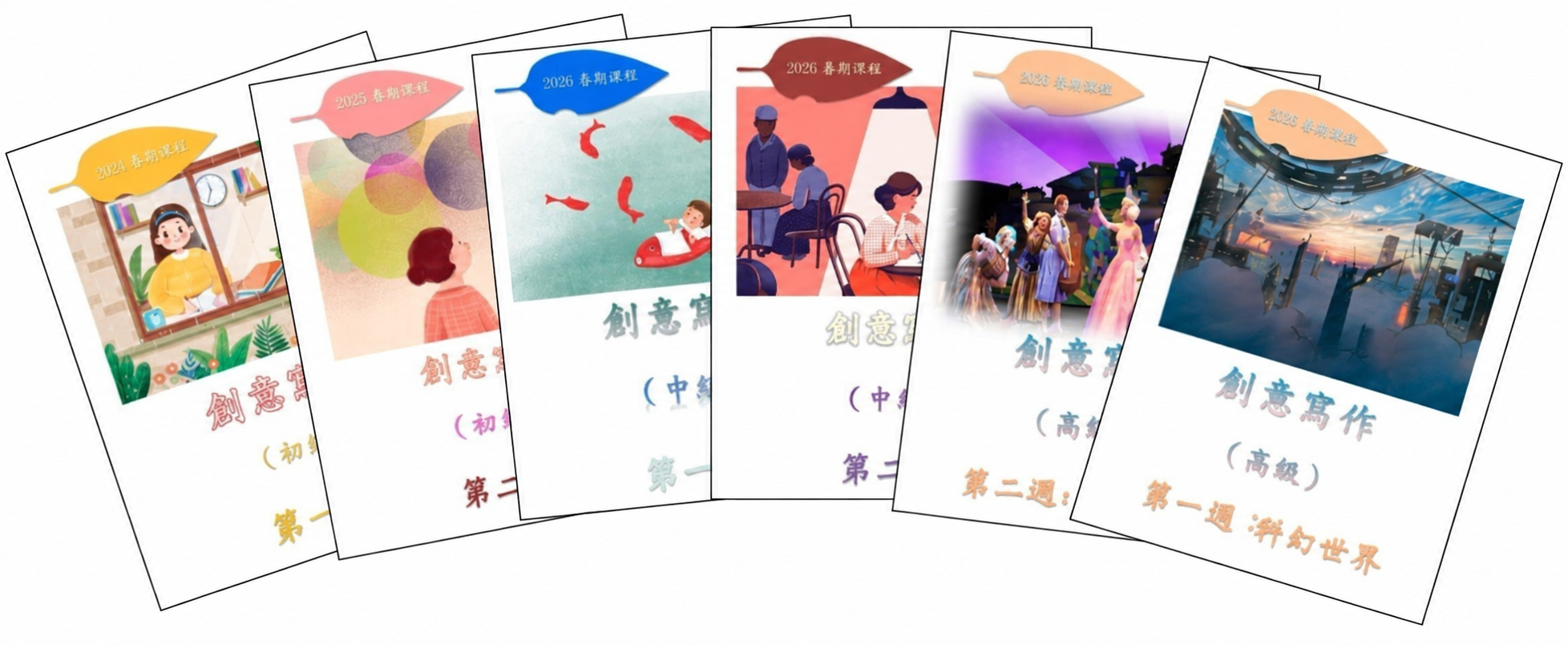
也正因為如此,我們更希望孩子在寫作中保留真實的感受、獨特的觀察和自己的表達。That is why we want children to retain their genuine feelings, distinctive observations and personal expression in their writing.
漢源也將這樣的理念持續融入系列創意寫作課程,帶着孩子從觀察、想像和表達出發,寫出真正屬於自己的文字。Han Yuan continues to bring this belief into its creative writing courses, guiding children from observation, imagination and expression towards writing that is truly their own.
作為深耕香港本土二十餘年的中文教育頭部品牌,我們始終相信:AI 可以生成文章,但孩子自己的聲音,無可替代。As a leading Chinese education brand rooted in Hong Kong for more than two decades, we have always believed that AI can generate an essay, but a child’s own voice is irreplaceable.